

I have known Padmashree Balaram long enough to be sure that she will move mountains – sometimes physical mountains of trash – to find a fix to a waste issue. There are few people as committed to the pursuit of solutions in this area – whether these involve eliminating black spots, advocating for best practices in waste handling, or getting multiple stakeholders to come together to collaborate for change and progress.
Working in this space was not really in Padmashree’s radar a couple of decades ago. A mother of two, she was managing things on the home front while tutoring high school students in Chemistry and Math – first in Delhi and then later in Bangalore when her family moved to that city.
As she got involved in waste initiatives in her Koramangala neighbourhood, however, she began to relish the inherent challenges and learning through it all. In contrast, tutoring began to feel more monotonous. But she didn’t know the degree to which she would get sucked in when she began.
“Things just happened organically at first,” Padmashree says. “I took one step and then another and before long, I was completely invested in the problem.”
Padmashree’s initial foray into this area happened when her daughter, then a fourth grader, was dealing with chronic asthma and wheezing. In trying to identify environmental triggers for her condition, she zeroed in on waste burning in her locality. One such site was right down the road from her where a group of settlers living in makeshift houses routinely set fire to trash piles that accumulated outside their homes. The piles started small but grew exponentially in a matter of days, in the way that such dumps often do.
Padmashree describes the psyche that leads to ‘black spots’ like these:
“When they see a pile of leaves, people passing by will throw cigarettes and chips packets on top of it. As long as there’s something there, they feel justified in adding to it. So a primary dump becomes a secondary one that then becomes a tertiary dump. By the end, it has diapers, sanitary napkins, everything. And then it’s all burnt in the night.”
Waste burning was a practice that had health implications for everyone in the vicinity, including Padmashree’s family and those responsible for the fires. When she tried to talk to them about it, she was told they had no other option in the absence of regular waste collection.
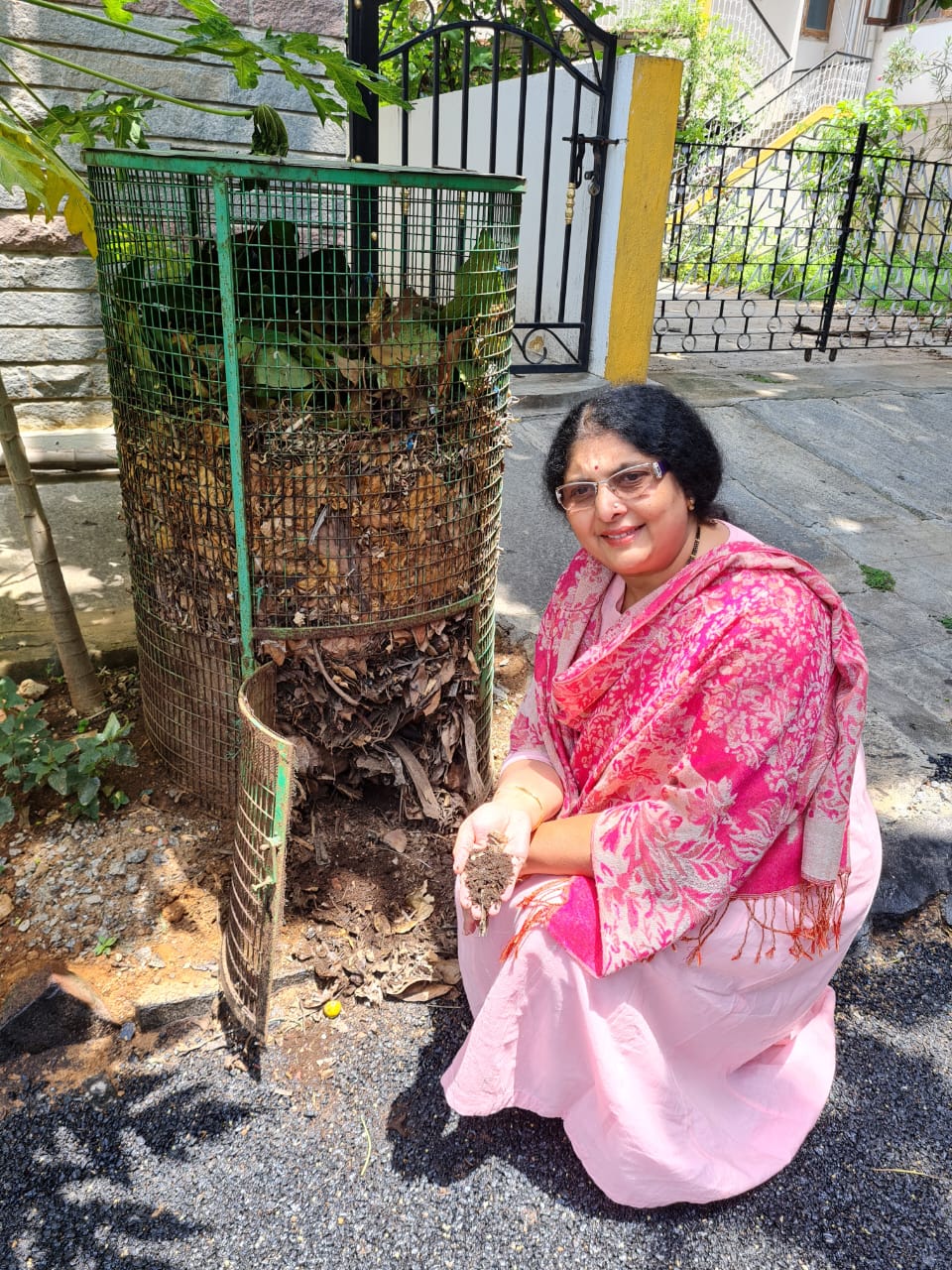
Padmashree with one of the 100 or so leaf composters set up in her neighborhood to eliminate the need for leaf burning
A Wicked Problem, Locally and Globally
“I am glad that I didn’t know how complex a problem this is when I began. I may never have gotten involved if I had known”, Padmashree says.
She remembers the first time she felt she had made a significant breakthrough, before being dealt a reality check.
“I thought I had solved the waste crisis when I was able to summon the waste auto driver to get a mattress cleared from a location near my house. But the very next day, I found the same mattress at another spot not too far from the original one. I knew then that this was not an easy problem to crack.”
She also realized that the dumping she saw in her Bangalore neighbourhood mirrored how rich countries handled their own waste – by shipping it to places where it was no longer their problem to address. The question to ask – at the local or global level is: why does trash end up in a given location in the first place?
When it comes to waste generation, it’s clear that the convenience economy has created a beast that is now hard to contain. Padmashree contrasts modern day lifestyles with the practices at her grandmother’s house in Hubballi in North Karnataka when she was growing up.
“There was no packaging. Even chips were homemade. Breakfast was served on large jackfruit leaves. Everybody had to finish what was on their plates before they were given more. There was just no wastage.”
Even the jackfruit leaf plates were bypassed during dinner, she said, when leftovers from the day were rolled into morsels and directly placed into the hands of the children, as well as some of the adults. The no waste way of life extended into creating utility for all kinds of kitchen by-products – wood ash for scrubbing pots and pans, coconut husk for other cleaning tasks, and more.
She said the first time her mother got a store plastic bag when shopping, she was floored by the convenience of it. And with that small shift in consumer mindset and expectations, the old sustainable way of life slowly unravelled.
The Mandur Protest, New Guidelines and the Plastic Ban
In 2014, residents of Mandur, the site of the landfill where much of the city’s waste is transported, formed a human blockade to physically stop waste trucks from entering their village. They had lived with the stench and toxicity of Bangalore’s garbage for years now and had decided that enough was enough.
It was a protest that was long overdue, Padmashree says.
“…Lead, mercury, and so much more leaches into the groundwater [in Mandur]. There is a continuous stream of methane from the landfill – one of the most dangerous greenhouse gases after carbon dioxide. So this is the cocktail that the children there are taking in on a daily basis. I felt like we, in urban Bangalore, were directly responsible for it. It was a deeply emotional eye opener for me. It made me aware of my own practices with waste.”
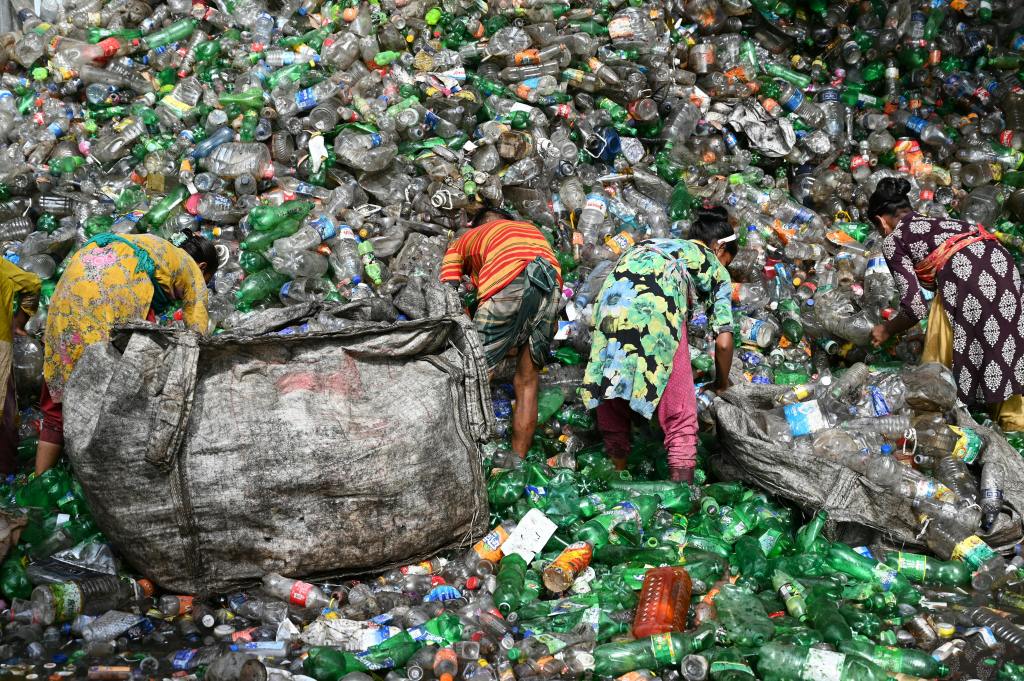
In the wake of the Mandur crisis, the city’s municipality drafted new guidelines on waste segregation for households and others. Padmashree and other volunteers in her neighbourhood began disseminating awareness videos and going door to door to talk about the guidelines and the three bin model for waste – dry, wet and rejects.
Over the course of the drive, the group arrived at a consensus. Single use plastic (often abbreviated as SUP) had to go.
Padmashree says: “There is no way to check if someone is segregating properly when everything is tied up in an opaque plastic bag. But if it’s in a bucket, then I can check and see if there are violations and call them out. So we realized that the only way to enforce segregation is to get rid of single use plastic first.”
In collaboration with local authorities in her Koramangala ward, the campaign to eliminate SUP in the city was launched. Padmashree created a Whatsapp group of everyone she knew in Koramangala and added many prominent BBMP officials to it. Through consistent messaging and on the ground vigilance over a period of twelve months, they started seeing results – in Koramangala to start with, and soon across the city.
Karnataka became the first state at the time to implement a ban on SUP, with other states following suit. And although it has now crept back in at the kirana store and street vendor level, Padmashree says that they have largely eliminated it from bigger retail stores and chains.
From Kitchen Waste to Cooking Gas: A Circular Solution
Even as the group made headway with these efforts in Koramangala and beyond, Padmashree felt that technology was needed to accelerate processing.
She says: “Composting is a 40-day process and if you want to do it at the ward level, you need a lot of space. We can manage it in smaller amounts within individual apartment complexes but not at a scale beyond that.”
This is when she and a few others reached out to Carbon Masters, a climate tech organization that had recently set up a small biogas plant at the ISKCON temple in Bangalore. The plant processed the temple’s daily wet waste, converting it into biogas to power its kitchens, as well as biofertilizer.
During the first interaction, there were reservations on both sides. For their part, the Carbon Masters team wasn’t convinced that Padmashree and her group had the political and financial backing needed to get the project off the ground. Padmashree was unsure if the solution could be seamlessly implemented in the ward. But after a trip to the temple to inspect the setup there, she was sold. The entire operation based on anaerobic treatment of wet waste was clean, stench-free and most importantly, beautifully circular.
Thanks to her growing clout within the city’s administrative circles, she was able to get buy-in for the biogas plant in her Koramangala ward and it was operational within eight months. Today it processes close to 10 tons of wet waste per day, producing enough biogas to run the local Empire Restaurant’s kitchen. The project has also created a roadmap for other communities and locations in Bangalore interested in exploring this solution for their wet waste. The project got international recognition in 2018, with the three stakeholders – the BBMP, Carbon Masters, and the Koramangala Resident Welfare Association led by Padmashree – receiving an award from Better Together, a German government-led global competition that spotlights collaborative innovation to solve local climate challenges.
A Market Clean-Up and a Vision for a City Zone
At one point, wastage was rampant at Madiwala Market, a large wholesale vegetable market in South Bangalore. Unsold produce was dumped, primarily on the market premises. With funding support from Social Venture Partners, a philanthropy-oriented group that she is a member of, Padmashree and her team have now created channels for this produce to be used and consumed. A bulk of it is dispatched to gaushalas and piggeries for consumption by resident animals; vegetables are sent to local shelters or community kitchens; lemons are carted off to an organization that makes natural bio-enzyme cleaning products.
Much of this redirection is coordinated through Whatsapp where leftover items are posted twice a day and then sent to whoever wants them. Down the road, Padmashree would like to see if an app can be created to make this process more efficient and to cover more markets in Bangalore.
In what is her most ambitious and comprehensive undertaking, Padmashree is now spearheading another multi-stakeholder project called Swaccha Belaku (roughly translates as ‘the brightness of clean’) project – again with support from Social Venture Partners. With Swachha Belaku, the goal is to create a seven star zone – as defined under the Swachh Bharat mission guidelines – in Bangalore’s Yelahanka area. Alongside city bodies such as BBMP and SWMRT, and with support from groups such as Yelahanka Eco Group (YEG) and Vedan Trust on the ground, the aim is to optimize segregation at source, and ensure that collection and transportation take place smoothly across the entire zone.
“As long as [these parts of the process] are fixed, the rest is easy”, Padmashree says.

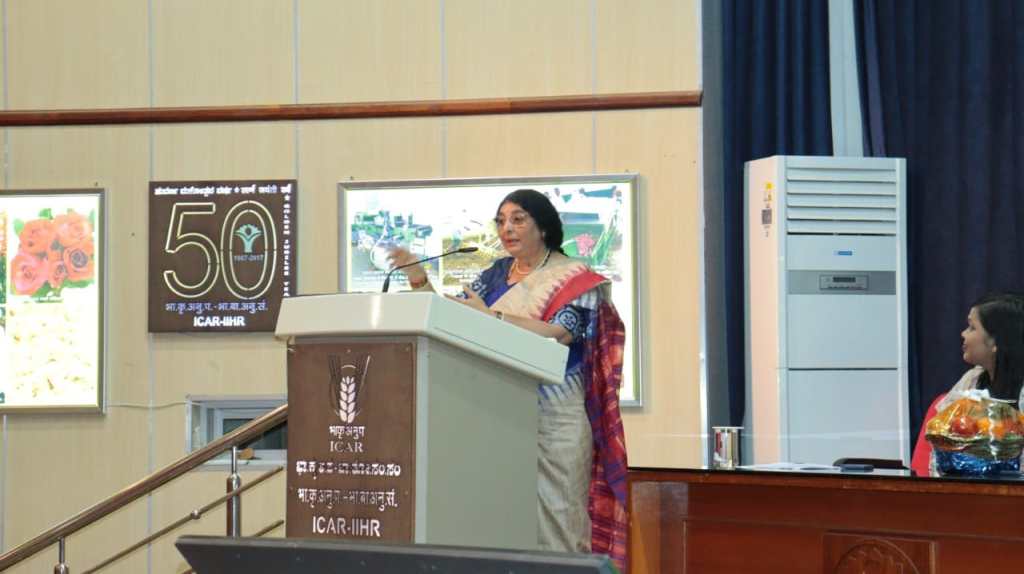
Members of stakeholder groups in the Swachha Belaku project
And so this eco-warrier is now continuing her crusade in Yelahanka and beyond – nudging schools, apartment complexes, companies and institutions in the area to think more deeply about waste, its many pathways through the system, and how they can modify their practices to make a significant dent in the problem. Thanks to her activism, several institutions in the city have pledged to become zero waste, or to ban use of all single use items and disposables on their campuses.

Staying the Course on the Waste Trail
But waste is a multi-peak landscape, each one presenting a new terrain and set of challenges. Ask her about Extended Producer Responsibility (EPR) and Padmashree rolls her eyes. “Don’t get me started on that”, she says.
She goes on to cite many examples of problematic packaging among consumer brands – foil packets for chips, shampoo and pickle sachets, and much more. While companies have conveniently passed on the burden of disposing of these to the consumer, there is no way to ensure that they find their way into appropriate bins and processing streams. More often than not, they end up in water bodies. “I don’t know how you fight this battle”, says this indefatigable activist, conceding defeat for once.
For the average person who is aware there’s an issue but feels removed from it, Padmashree plea is this: educate yourself, jump in, get involved. Read a book on the global crisis, attend a workshop, or volunteer in a local waste initiative. The more we learn about the problem, the more mindful we will be of our own habits. Every deep journey, as Padmashree’s own story illustrates, begins with a little bit of knowledge.


 small & S..L..O..W
Leave a reply to terristails Cancel reply