

I have been an Aazol customer for a couple of years now and love many of their products. It’s my go to source for a flavorful garlic chutney powder and when I need a satisfying sweet fix, the brand’s soft coconut jaggery chikki does the job. Last year, I was thrilled to be able to order Alphonso mango puree (aamras) from them, well after the season. It’s just pure fruit in a can with no preservatives.
Launched in 2021 by Apurva Purohit and her son Siddharth, Aazol (Marathi for ‘home of maternal grandparents’) is a socially conscious venture that markets and sells traditional Maharashtrian food products, spices and sweets sourced from women-led self-help groups and micro-entrepreneurs in villages.
It’s also the 57-year old Apurva’s latest bid at reinvention, after a career in which she has worn many hats, led media organizations, and served on the boards of consumer companies.
In recent years, she has actively championed the empowerment of women in the workplace, emerging as a top LinkedIn voice and publishing two books on the topic – Lady, You’re Not a Man (2014) and Lady, You’re the Boss (2019). Each was an amalgamation of her own experiences and what she was seeing women around her grapple with at different points in their careers.
She says: “I wrote the first book after noticing how younger women often dropped out of the workplace after marriage or children. They couldn’t figure out how to manage both home and work, and lacked older role models in this area. So the book was essentially a how-to on balancing these two competing priorities. The second book happened when I started interacting with women who were in senior roles – GMs and VPs in their companies – but whose careers had stagnated for reasons that were internal to them. Essentially they were tired of fighting to be counted and heard. There is a sort of invisibility cloak that older women in senior roles have to contend with. So I wrote the second book to speak to this segment of women.”
Apurva says that the idea for Aazol came after she met a group of women selling traditional Maharashtrian food products at an exhibition with many other self-help groups. She and her son had been talking about working together to impact causes they each cared about – women’s empowerment in her case and the environment in his. After sampling the women’s products, she knew there was a potential venture there that could address each of those causes. Small batch food production for selling in nearby geographies has a reduced carbon footprint by design. At the same, they could create sustainable and empowering livelihoods for many rural women.
Read on to hear Apurva share more about how she and her son got Aazol off the ground, the big challenge they had to tackle in the beginning, and how the team thinks both small and big in running this rural-centric enterprise.
A Business Born Out of a Chance Encounter
It was just pure serendipity that we met these women and realized that there was so much untapped potential in rural India. Around us, we knew there was a greater focus on clean eating using seasonal and fresh items. Despite this, the local options available to consumers were limited. You can get your noodles from Thailand, your cherries from New Zealand and your apples from Australia. But there is a whole range of local products that people don’t know about and that we now felt we could introduce them to.
We wanted to first focus on traditional foods from our home state of Maharashtra because I have always felt that Maharashtrian cuisine was under-represented globally, as compared to Punjabi, Gujarati and other regional cuisines. There are many healthy options in our traditional cuisine as well as substitutes for items that are typically imported. One example is the sticky Indrayani rice which is a perfect stand-in for Thai Jasmine rice.
My son went across Maharashtra to meet and talk to people in villages and sample their products. We got food experts and historians to guide us at this stage. We did a lot of lab testing on the products we shortlisted to make sure they met food safety guidelines. Six months later, in late 2021, we were ready to go live with our first offerings through Aazol.
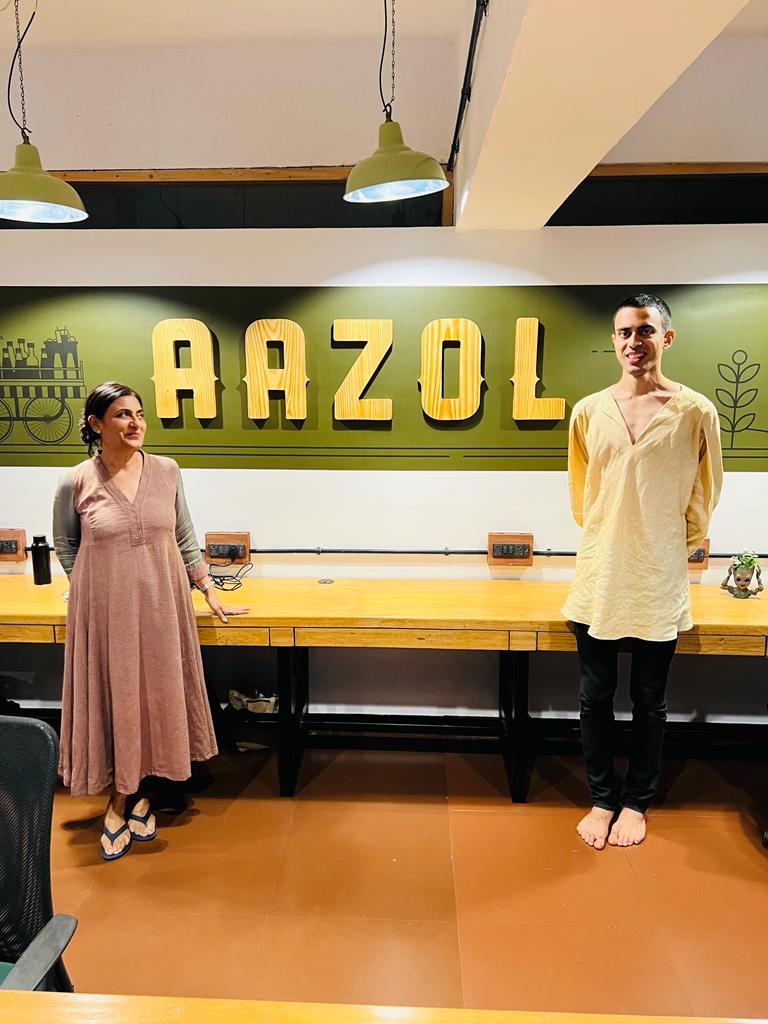
Apurva and Siddharth Purohit, Co-Founders of Aazol
Creating Access to Larger Markets
There are two big parts to the business. One, of course, is the marketing and branding aspect. Even the name has a strong emotional connect and evokes a sense of nostalgia for most people.
The second aspect of packaging and logistics was more challenging. India’s logistics revolution has largely been in the ‘warehouse to consumer’ delivery space – enabled by the likes of Amazon, Flipkart and even small D2C brands. It includes many delivery partners and aggregators. A lot of money has gone into building this infrastructure so that customers can get their products delivered in 24 hours or in 20 minutes, in the case of quick commerce. But the infrastructure to move products from villages to warehouses is still not built and that was the toughest part for us to tackle. To move something from a tribal belt in Nandurbar to a warehouse in the absence of proper roads, is a cost and resource-intensive effort. We did a lot of work at the outset in getting that supply chain ready.
Ironing Out Wrinkles and Overcoming Hurdles
We are a small startup but our processes – around inventory management, packaging or financial management – are as sound as those of any mid-size business. We knew that it takes systems and processes to scale up. The same processes that allow us to sell 10,000 products today can see us through to a monthly volume of one lakh units.
Apart from logistics, we also had to figure out packaging. We used glass bottles at first but soon moved to more practical solutions. After a few months, we also began to understand how resource constrained they are in villages. For example, while we sent them the packaging for each unit – pouches, jars, etc. – when the items came to us they were bagged in whatever the women had on hand at their end. They did not even have cartons to box everything in. So now we send them external packing cartons as well.
We also realized that, apart from the D2C route, we have to think omnichannel to be really visible as a brand. So a year into starting up, we began our retail journey. As a result, Aazol products are now on the shelves in Nature’s Basket, Reliance Signature, and other similar stores.
Although we have figured out the logistics piece, our suppliers still face umpteen challenges on a daily basis. When you are in a small village with patchy coverage, it’s difficult to even connect, let alone navigate all the intricacies of selling and operating as a business. They often don’t have power around the clock to operate their mixers or charge their phones. So we have to be ready to troubleshoot and offer solutions for them. Since we produce in small batches, we need to have both the production and logistics lines open 30 days a month.
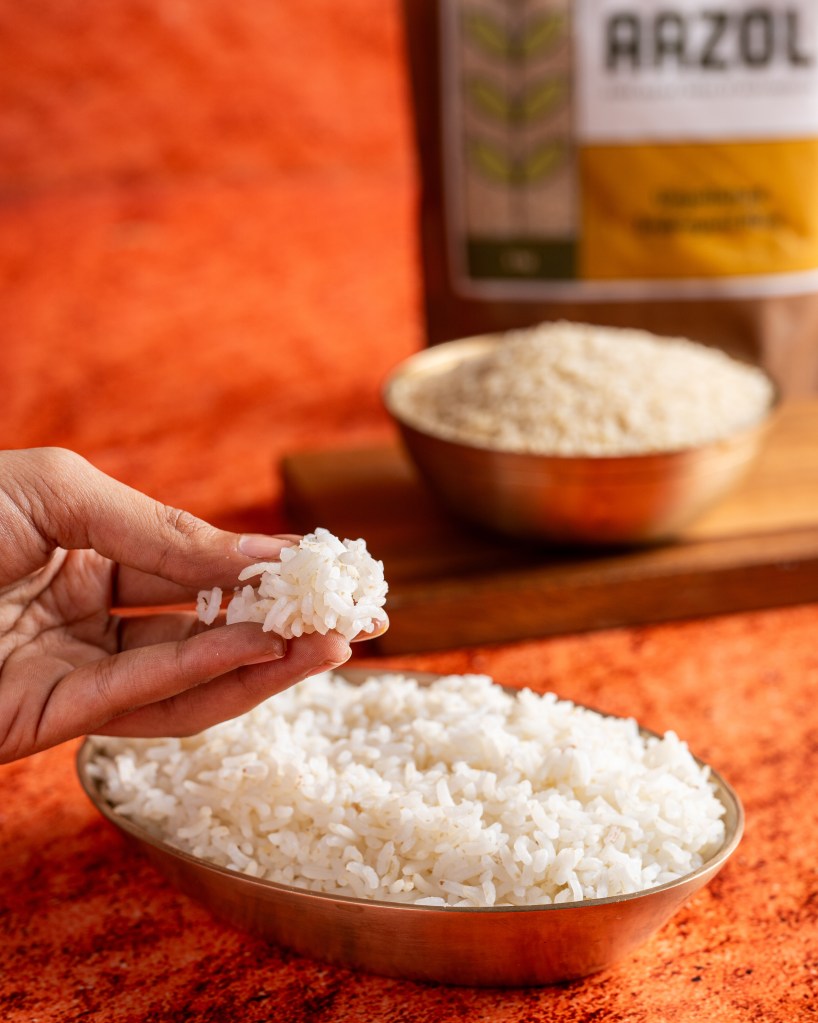
Aazol products are now available in select stores
Figuring Out All the Ways to Add Value
The women clearly know how to make quality products. There is traditional wisdom and ancient recipes at work here. The Malvani masala in our range, for example, is part of a community’s food archive with the recipe passed on from one generation to the next. We can’t and don’t want to tinker with such authentic recipes.
Where we come in, of course, is in helping them scale. If they were making 500 products in a batch previously, they now make 1500 because we are buying from them. This involves even helping them source raw materials at times. If they need a few hundred kilos of green or red chilis, we can figure out the right suppliers for them.
We also try to help them increase efficiency wherever possible. We gave them moulds for making laddoos, for example. We are particular about handmade and small batch production. But if we can make things easier and faster for them, we will do that. Some of them wanted solar panels so that they didn’t have to stop production due to power outages. So we helped them with sourcing and installing these.
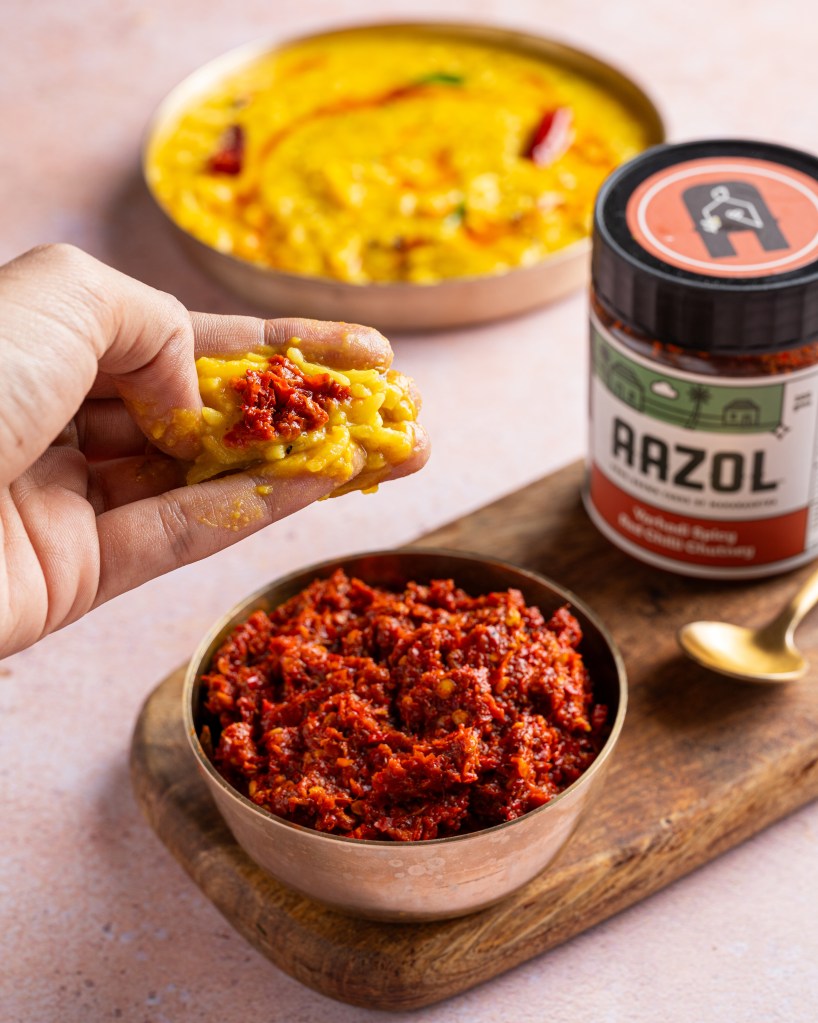
Keeping it fresh with small batch production
Retaining the Essence of Small & Slow While Growing
We define ourselves as a small startup with ambition. We are impacting around 5000 women now but would like that number to grow to 5 lakhs and then 50 lakhs down the road. But we are still focused on the ‘small is beautiful’ ethos behind the business, starting with our small batch production process to ensure freshness and consistency in quality.
We are also not in a rush to scale at the expense of profitability. That’s a pattern that you often see these days with easy money coming in from private equity and venture capitalists. You burn money on marketing, grow top line, but never really become profitable. We all know there are 20- and 30-year old organizations out there that are still to see profitability.
We have been paying fair prices and salaries from Day 1 but our goal was always to be a cooperative with profit sharing for partners, including employees and our self-help groups. There’s a lot of focus on getting our marketing spends and creatives right. We believe that incremental steps will lead us to profitability faster than quantum leaps.
We are self-funded and plan to stay that way. With our vision to build a cooperative, there’s no exit plan in sight. We are very clear about what’s needed for sustainable growth and our journey to scale. We are as ambitious as the next person who wants to become a unicorn. We just have a different idea of what it takes to build a business the right way.

Aazol’s rural producers and partners
Changing Lives in Rural Maharashtra
We source our mahua laddoos from a remote tribal zone in Nandurbar district. These are made from the mahua flower, and are rich in iron and calcium. The community is poor and the women there are taught to make these laddoos so that their children can get a much needed boost of nutrition. Before we started working with them, they did sell the product outside but didn’t make much money through this route. For extra income, the women often moved to Gujarat during non-harvest times to work in daily labor jobs. Now that we are buying from them and ensuring ongoing production, their financial situation has changed dramatically and they no longer need to be away from their homes for seasonal work.
Another success story involves small self-help groups that typically employed ten women in the past. Many of these have expanded to 50 women so that they can increase their production capacity in order to work with us. There are several examples of families that have tripled their monthly income – from around INR 10,000 to INR 30,000 – due to their association with Aazol.

Nutritious mahua laddoos from the Aazol line
My Personal Favorites From Aazol
I like everything we have but If I had to pick one item, it would be the Ghati masala. This is actually a mix of many spices, including onions, and it works so well in both vegetarian and meat dishes. You can add it to a pulao or a dal and it just elevates that dish. With sweets, my all time favorite – and our largest selling product – is the coconut jaggery chikki.
Another personal favorite is our khapli atta – a low GI variety of wheat flour. Although I have always liked eating chapatis, I found that most commercial wheat flour blends often left me feeling bloated. Khapli atta is not just delicious but it also doesn’t affect your body in that way.
The Team Running the Aazol Engine
Apart from my son Siddharth and I, we have Sangeetha, with considerable experience in media, who is now our Chief Growth Officer and a shareholder. She spearheads all our retail initiatives and growth. We expect that to be a bigger vertical than online over time. We have very committed department heads – for food technology, finance, operations and more – who have been with us from the beginning. The rest of the team are young – mostly in their 20s – and keep me on their toes with their spark and enthusiasm. We are largely based in Mumbai with a couple of us outside the city.
Tips for Entrepreneurs Seeking to Collaborate With Rural Producers
The Government has done a great job in encouraging SHGs across rural India. With a country as diverse as ours, there are interesting regional products available every few hundred miles. There are a few points I would like to highlight for those wanting to operate in this space:
- We have great products in our country but many are poorly packaged or marketed. There is a need for good entrepreneurs in the space of packaging and design.
- When you have an idea, think of the customer need gap and then work from there. Just being passionate about something is not good enough.
- There are lots of opportunities for niche products in our country today. Customer diversity is staggering and as a result, segmentation can also be very granular.
- The digital revolution is opening up many opportunities for both buyers and sellers. Figure out how to ride it.
- Finally, quality of product and service trump everything else. No amount of marketing can replace those.
What’s Ahead for Aazol
We are going to focus on building our sales channels in the coming months. Once that piece is set up, then we can start working with more self-help groups and maybe start looking at other states to expand to as well. We’ve already got offers from people in Goa, in Karnataka…
To order Aazol products or follow them online, visit: https://aazol.in/ or on Instagram @aazol


Leave a Reply