

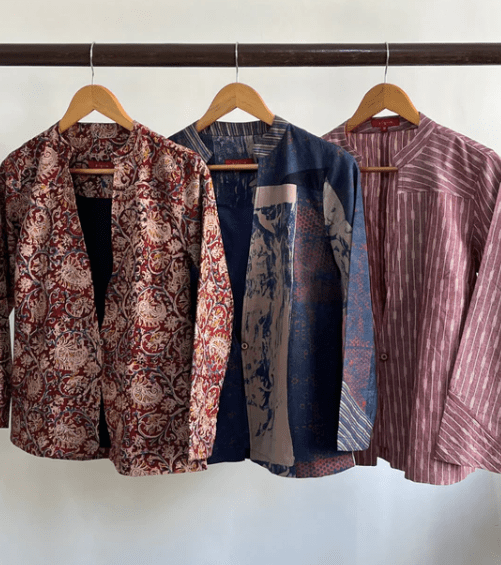
It was a few years ago at a Sunday Soul Sante (one of the country’s largest flea markets for handcrafted and artisanal products) in Bangalore that I first ran into a Pilgrim rack filled with long skirts, shift dresses and tops in vibrant prints and colors. I stepped into the makeshift dressing booth to try on a Butterfly jacket – a form flattering style with wooden buttons down the front. I think that was the point when I officially became a diehard Pilgrim fan and regular customer of the Bangalore-based small brand.
With pieces that score high on fit and comfort, the Pilgrim collection is designed for women who look for both quality and value when shopping for everyday clothing. Buying a Pilgrim piece can be a personalized experience in many ways. It’s possible to pick a fabric and get it fashioned into a preferred style from among the options in their line-up. Any given style can be modified based on a customer’s specifications too.
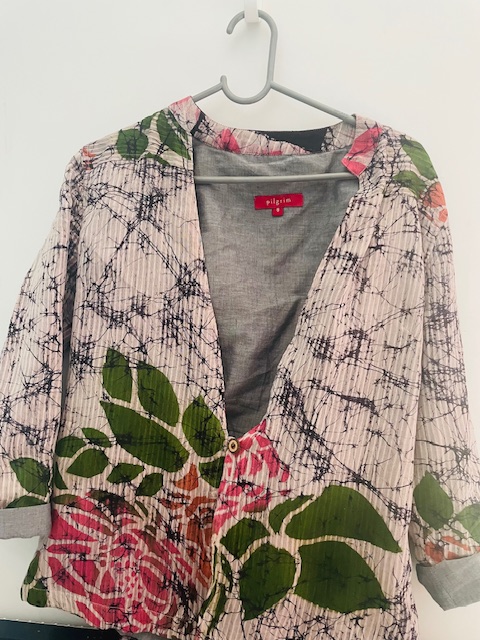
There have been at least a couple of times in the last few years when I have sent in old saris and other fabric to the Pilgrim team to be remade into more usable daily wear. A batik print sari was upcycled into a kurta and lightweight jacket. A green linen sari assumed a new avatar as a breezy co-ord set. And a couple of meters of color blocked sarong fabric bought in Sri Lanka were converted into a dress and current wardrobe favorite.
It was great to catch up with Priyanka Haridas, the creative force behind Pilgrim over a morning Zoom chat recently. A Bangalore native, she was settling into a career in corporate HR when she decided to switch tracks and start her own line of handcrafted clothing.
It was not an easy jump to make. “People are now much braver when it comes to starting up. There is a lot more willingness to take a chance on ideas. When I started in 2012, I was very apprehensive”, Priyanka says.
It’s entirely possible, of course, that entrepreneurs like her who have bootstrapped their way into building a viable venture – purely on the strength of their ideas and conviction – have blazed a trail for a new generation of small-scale businesses.
She laughs. “I suppose so. But I know that I was full of self-doubt when I started. And that never completely goes away. I still question whether I am doing it right even today. But maybe that’s what keeps me going with this”.
Read on for more of Priyanka’s reflections on her journey and approach –- clearing the initial hurdles, figuring out the nuts and bolts of the business, why she identifies as a slow fashion brand, and more.
Starting Up Struggles
I had always been interested in fashion and clothing. But it was still a very hard decision to take the plunge. There was nobody in the family who had started their own business, let alone a clothing line. But, finally in Jan 2012, with a bit of my own savings, I decided to go for it. I travelled to meet weavers in different places to see where I could source fabrics from. I got in touch with a pattern maker in Chennai who could translate my designs and measurements into paper patterns that tailors could use as templates.
I wanted a physical store – online was not so big then – in a central location. I eventually found something that fit my budget – a basement space in Church Street. Having grown up in Bangalore, I always viewed Commercial and Church Streets as the city’s main shopping destinations. It was late July of that year before we launched the store with a small collection of about 12 styles.
There was a fair amount of trial and error with the samples we made initially. One of the early styles, Butterfly (the jacket style top described earlier in this article), needed six to seven iterations and a lot of tweaking before I was finally satisfied with the outcome. I still have those original samples with me. I then had to find a workshop that could handle my small production numbers while keeping a close eye on quality. Many of the places I went to initially were designed for bulk orders. There’s a lot of wastage in bulk and not as much attention to detail. I was finally able to lease some space at a Rajaji Nagar workshop where two machines were assigned to me.
Design, Sourcing and the ‘Whole Nine Yards’ of Fabric Options
Each new design pattern that I make goes through two or three iterations before it’s finalized. The patterns are initially created for average sizes – ranging from 6 to 10 and then I work on grading them, to a size 18 or a size 4. I have been working with the same set of weavers since I started in 2012. Many of them are based in Andhra Pradesh since I use a lot of ikat in my collection. I also source a few fabrics from Gujarat and Rajasthan. I am currently trying to get a small quantity of bandhani fabric from a weaver in Jaipur. I am planning to explore it as a fabric option although I know bandhani is prone to bleeding and so can be tricky to use.
When we started, ikat was not as widespread as it is now. Now, in order to make my designs stand out, I look for alternative weaves such as the Uzbek ikat I am using right now. That does impact my pricing, however. My goal has always been to keep my pricing in that sweet spot that makes my clothing affordable while still allowing me to cover my overheads and stay profitable.

Not your average ikat
The Pilgrim Woman & Pockets
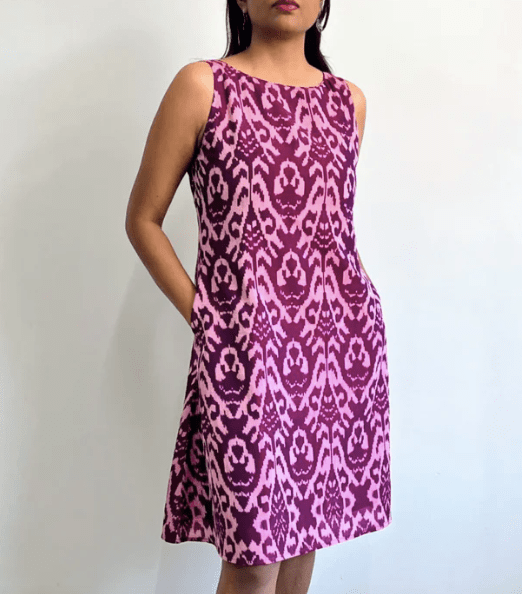
When I first started designing, I was seeking to make clothes that I personally wanted to wear – with an emphasis on handwoven and natural fabrics, primarily cotton. I felt there were many women like me who wanted clean lines without excess fabric — styles that were functional, versatile and could be worn all year round. Most importantly, I felt many women wanted pockets.
I had to really fight for these with the tailors and pattern makers I worked with initially. They said pockets would add bulk and didn’t work with women’s clothing. I stuck to my position though and pushed them to add pockets. If it worked for men’s clothing, I asked them, why did it suddenly become hard to implement for women. Happily, every dress and pant item in the Pilgrim collection now has pockets.
Fit, comfort and pockets
What is Small & Slow About Pilgrim
I was not consciously thinking about being slow and sustainable when I started Pilgrim. But that was always the idea behind it. I wanted to minimize stock and wastage in my production because it didn’t make business sense any other way. For any given design, I make one sample, photograph it, and then put it up on the website or on Instagram. Customers can order the item as is or request customization – with sleeves, length, and more. So, it’s really designed to be very customer friendly and to give people what they want.
We get upcycling requests from time to time and have converted a few saris into skirts or long dresses. We recently converted a dupatta into a kaftan for a customer. We are open to these requests but can only work with natural fabrics such as cotton, cotton silk and linen. Our styles and machines don’t work with synthetic weaves.
I am also personally very interested in another initiative that’s an offshoot of our operations – upcycling fabric remnants into various home décor products. This is a project that I started last December and we hope to launch some of these products on our website soon.
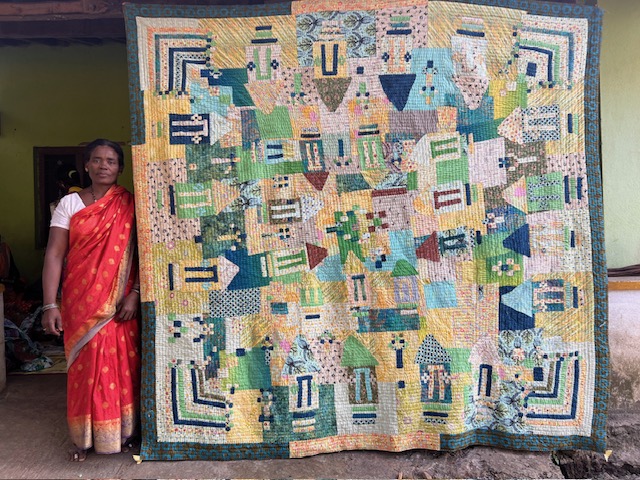
A sari’s new life as a graphic jacket
What Team Pilgrim Looks Like
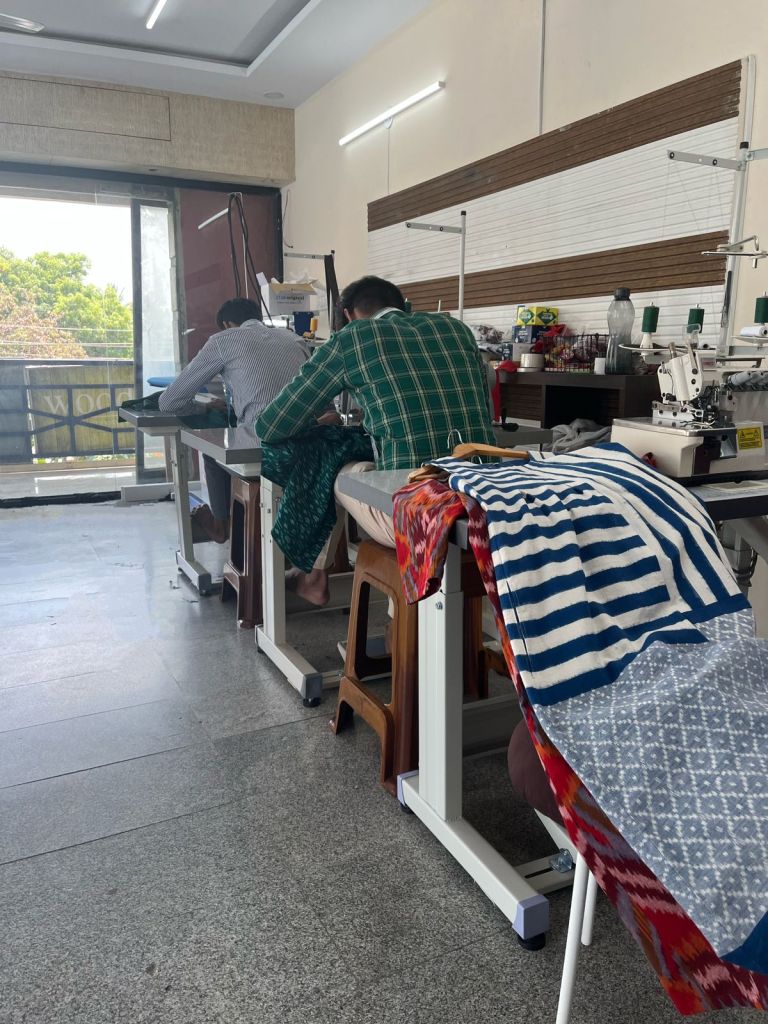
The first master tailor on my team worked with me for about 11 years, up until August last year. At that point, I moved my workshop from Rajaji Nagar to the current Sarjapur Road location near my home and he decided he was ready to retire. We have a new master tailor and other tailoring staff at our new location. Sudha is another very key member of the team who’s been there with me for about 12 years now. She manages the packing and tracking of customer orders and coordinates with all my vendors to make sure we get our fabric deliveries on time.
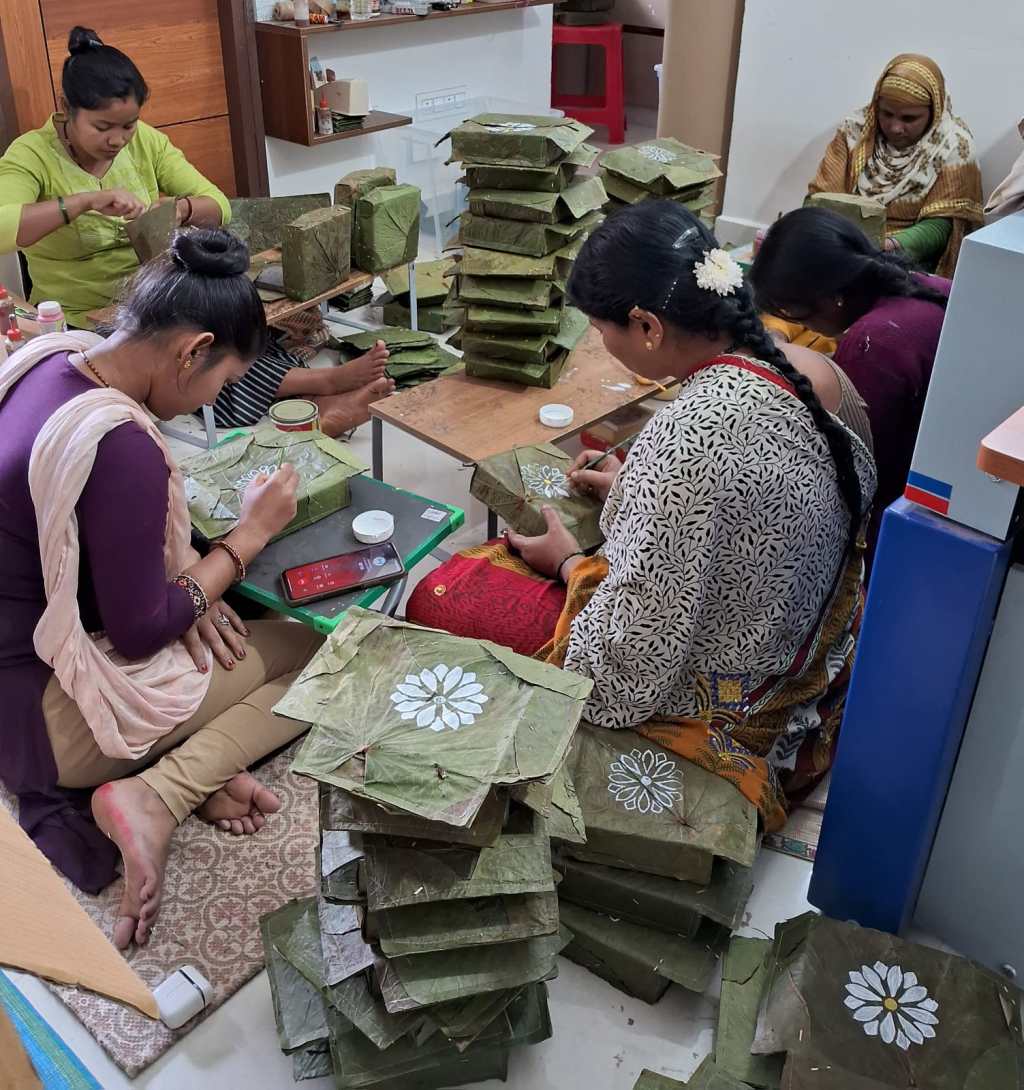
Team Pilgrim on the job
Responsibility Cuts Both Ways in Fashion
On the consumption side, I think the onus is on each of us to really think about what we need – to avoid buying for a single occasion and to be more mindful with our purchase decisions overall. If our consumption downshifts , then production will follow suit. At Pilgrim, we design for women who want timeless pieces they can keep for a long time. With a little bit of care — washing in cold water and not drying in direct sunlight — our clothes can last forever.
As a slow fashion brand, we are also focused on minimizing waste. My tailors would like me to pitch fabric remnants and not let it pile up in corners of the workshop. But I feel very strongly that we have an opportunity to reuse and convert them into products that people will enjoy having in their homes. There are just so many possibilities with fabric. For me, time and bandwidth are the main constraints in following through with these projects.
If we can keep fabric out of garbage bins and divert it from landfills, we would have done our bit as producers. I see many brands on Instagram stepping in to do really great work in fabric upcycling and reuse. I think that’s a very positive trend.
What’s Next for Pilgrim?
We shut the physical store during Covid, expecting to open it after the lockdown lifted. But, during the time that the store was closed, water seepage caused the flooring in one section of the store to be completely damaged. Financially, it didn’t work for us to continue leasing the space and so, at that point, we went completely online. It meant that we had to pay more attention to our website, add more and better photos, and improve the navigation. Looking back, it was clearly the right decision for us.
With our new workshop, our production capacity is also up. We typically do a couple of exhibitions a year, but I am hoping to participate in more of these outside Bangalore – maybe in Mumbai and Pune this coming year. I would also like to boost our online presence and ideally hire someone to help me with the marketing. I have handled it by myself so far, with some help from my husband. But I think the business is now at a point where I need more support on this front.
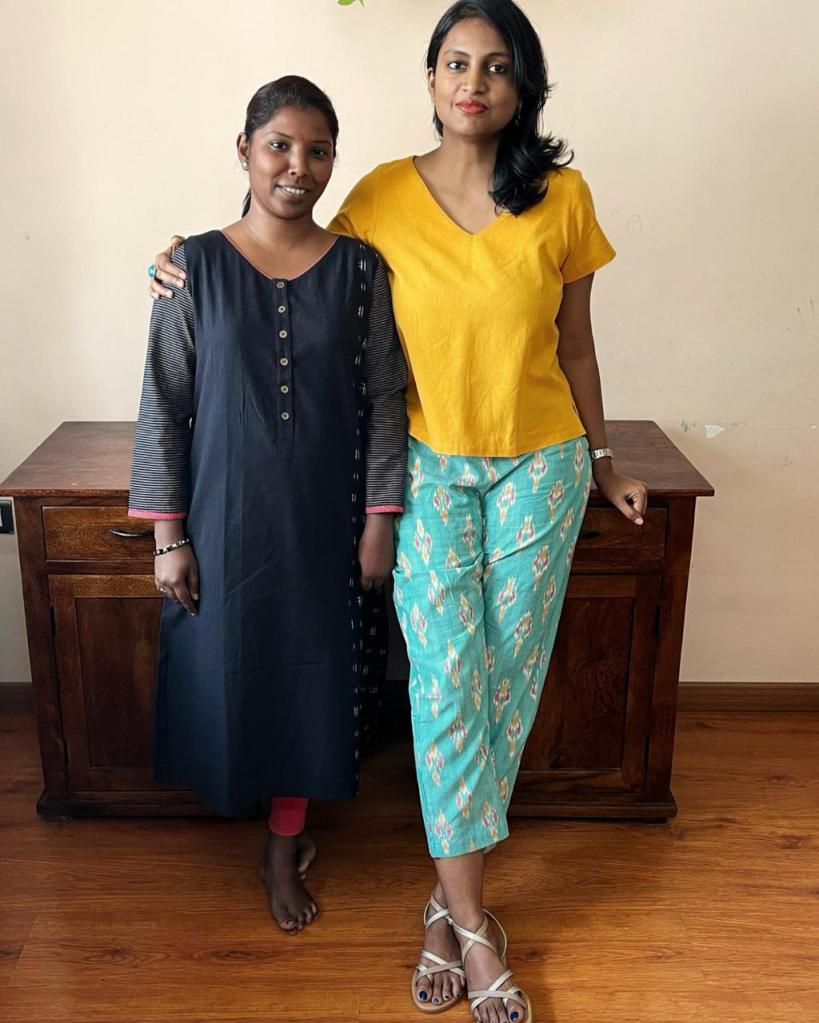
Priyanka (in sunshine yellow and turquoise ikat from her collection) and Sudha, Pilgrim’s Operations maven
To view the Pilgrim collection, visit www.pilgrim.net.in or on Instagram @pilgrimbangalore


Leave a Reply