

Last Diwali, I decided to skip mithai boxes and get a bit more creative with my gifts. I assembled a selection of healthy snacks – assorted nuts slow roasted to perfection by my talented housecleaning help, ragi laddoos, and a homemade peanut chutney powder – and used them to fill glass pasta jars that I had been collecting throughout the year. It felt great to recycle those jars and give them a second life. But I still needed that final touch – that truly sustainable piece of packaging to place the jars in.
That’s when I stumbled upon Klean-Green’s packaging products—boxes, bags, and more—all made from leaves and fully biodegradable. Their small bags were perfect for my Diwali gifts and really tied everything together in the most eco-friendly way.
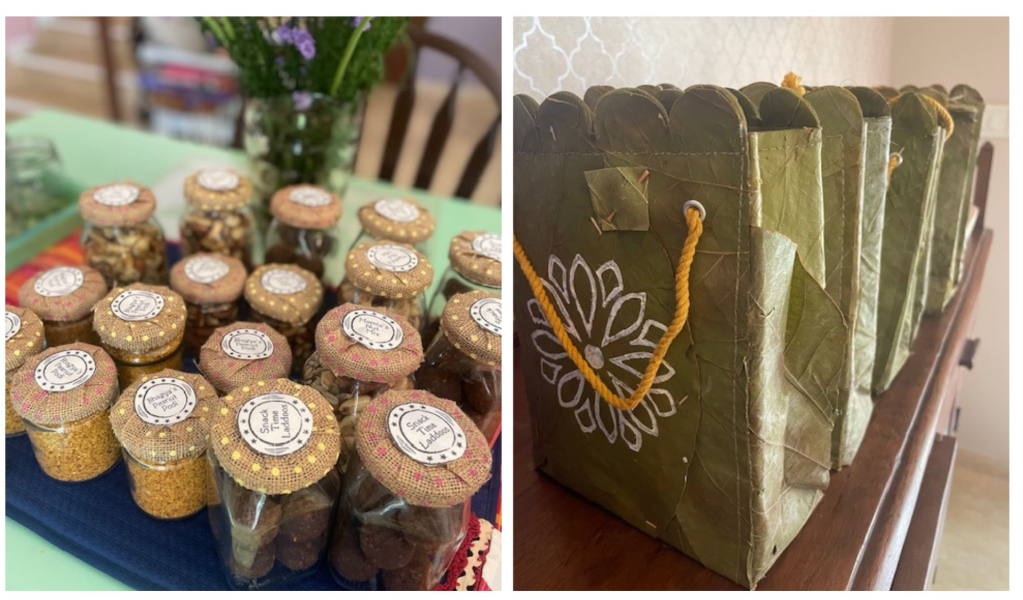
But it also made me eager to know about the origin story of this small, green venture. A quick LinkedIn exchange and a couple of days later, its founder and I were soon chatting on Zoom when she shared this story and more…
It was Covid time when Chetna Mukherjee really woke up to the problem of plastic around her. The Bhopal/Indore native and NIFT (National Institute of Fashion Technology) graduate had been in Bangalore for about ten years by then. She had previously worked as a designer in Delhi but had moved to Bangalore following her marriage. But it was the plastic waste generated during Covid – with PPE kits, masks, bags, gloves and more filling trash bins and piling up by streets daily – that spurred the activist in her to do something about the problem.
With microplastics so pervasive in our air, water, and soil, it was clear that we needed alternatives – now more than ever. But what were these alternatives? And how could something replace plastic which is so versatile when it comes to packaging solutions?
She began experimenting with different materials, including vegetables and corn starch. Many of these materials didn’t meet the core sustainability test. After all, altering the chemical structure of food products to make other products is inherently wasteful and energy intensive. And more often than not, the end products lacked the attributes to fit diverse packaging applications.
It was at this point that she realized that the solution may be staring down at us from the tops of trees across the country. “Leaves,” Chetna explains, “have a hydrophobic nature. You can see this every time rain drops sit on a leaf before falling off.”
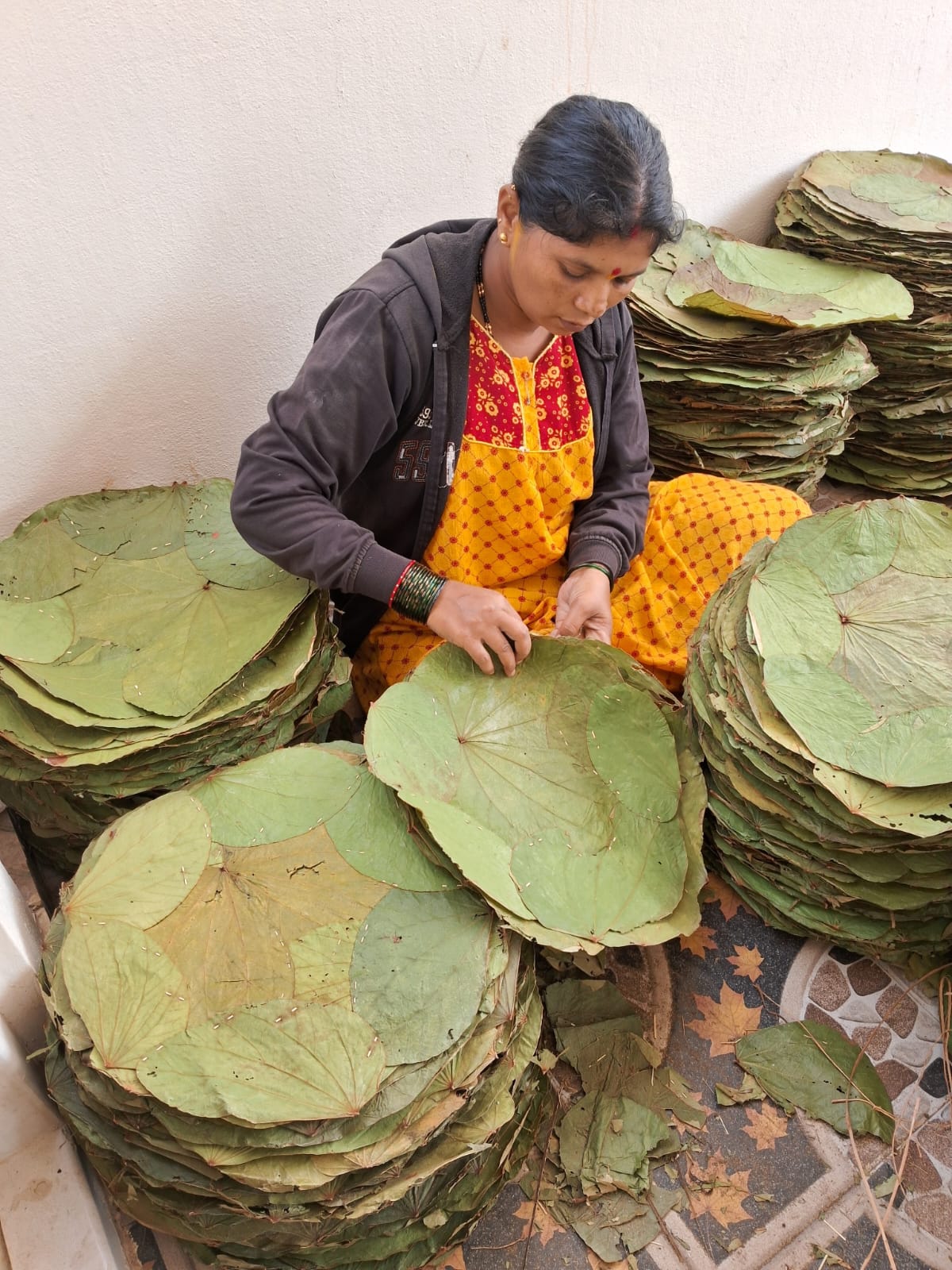
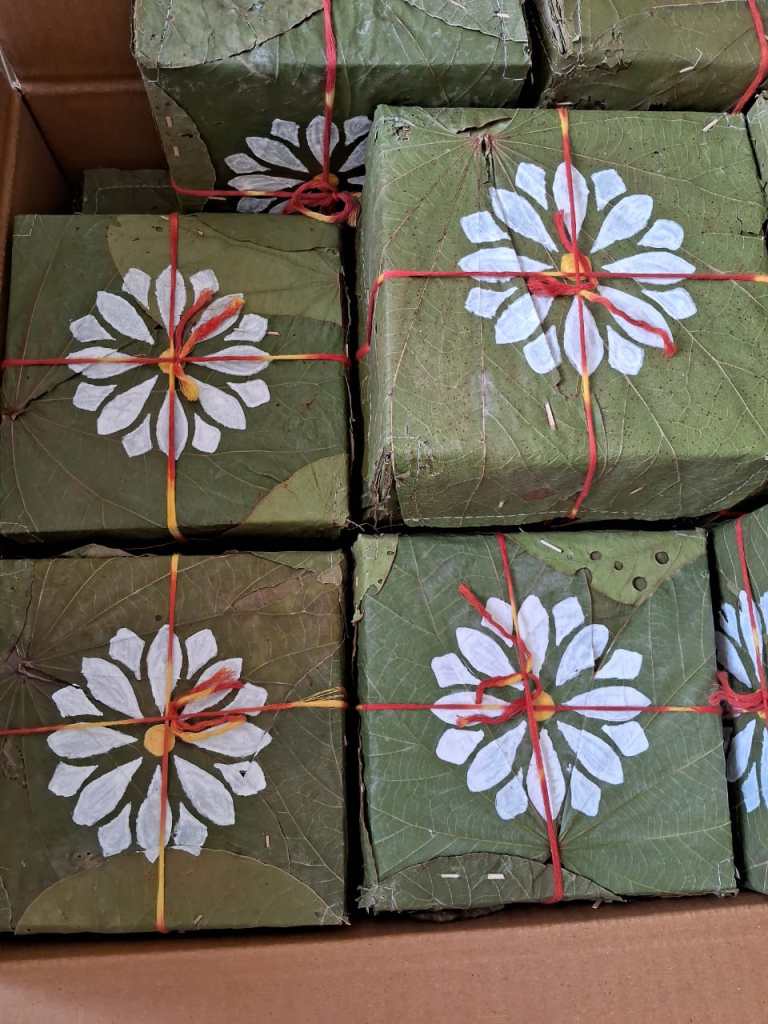
The starting point of her leafy experiments was patal – the traditional circular plates fashioned from banyan or other leaves. She realized that there was potential here even if it wasn’t a complete plastic substitute. “The leaf is stitched together with bamboo sticks, which creates small gaps where water can seep through. But it’s perfect for solid and semi-solid items.”
What began as a simple idea soon began to gain momentum. In 2020, Chetna applied for a women’s startup program at NSRCEL where she got positive feedback and the boost needed to press ahead with her concept. “We’ve come this far thanks to the guidance and mentorship I received from a lot of incubators in the initial stages,” she says.
Raw Materials and Sourcing Them
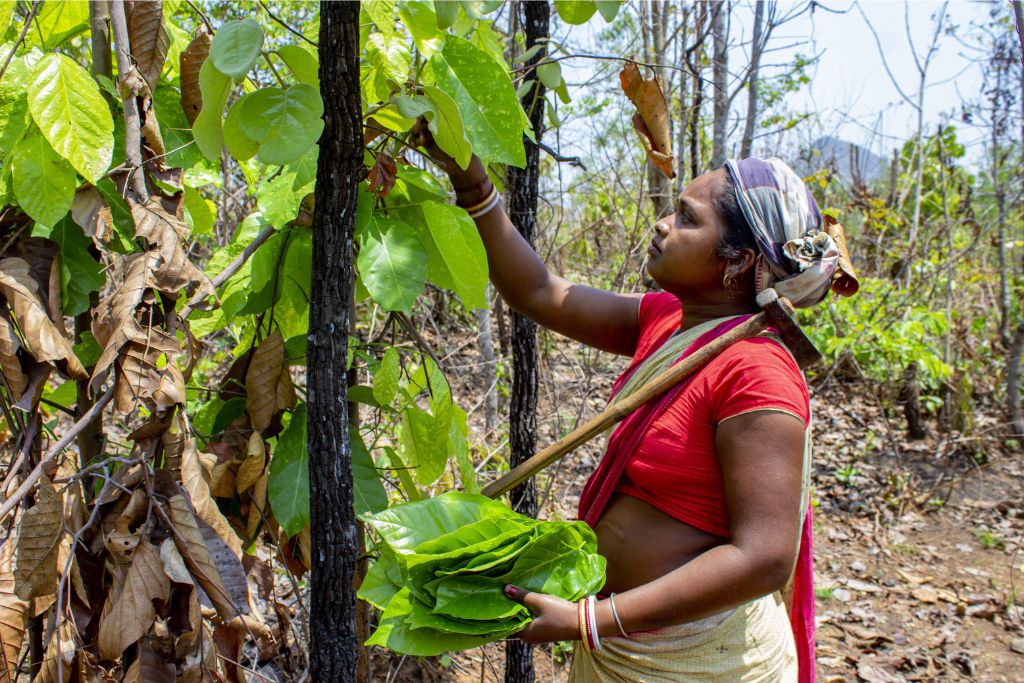
Many of Klean-Green’s products use leaves from a fast growing forest creeper (botanical name: Bauhinia Vahlii) that grows in abundance in many parts of India – including the northeast, Jharkhand, MP, Odisha and AP. It’s a source of livelihood in these parts with women fashioning plates from the leaves they harvest, simultaneously ensuring that they allow room for the tree to grow back quickly.
To procure her raw materials, Chetna partners with NGOs that work with tribal women’s groups in Odisha and MP. The groups make the plates or patal by hand and then box them to send to Chetna by train, an economical choice that also keeps her carbon footprint low.
Chetna’s online research has yielded other interesting information about the leaves, including the fact that they have potential antioxidant and anti-inflammatory properties, making them an ideal choice for wrapping food products in.
The entire chain of activities – from procurement to shipping to production is ethical, Chetna says, and designed with minimal environmental impact. She and her team have also developed a proprietary glue made entirely from edible materials, thereby eliminating the need for using chemical ingredients for sealing.
Design, Women Empowerment and More
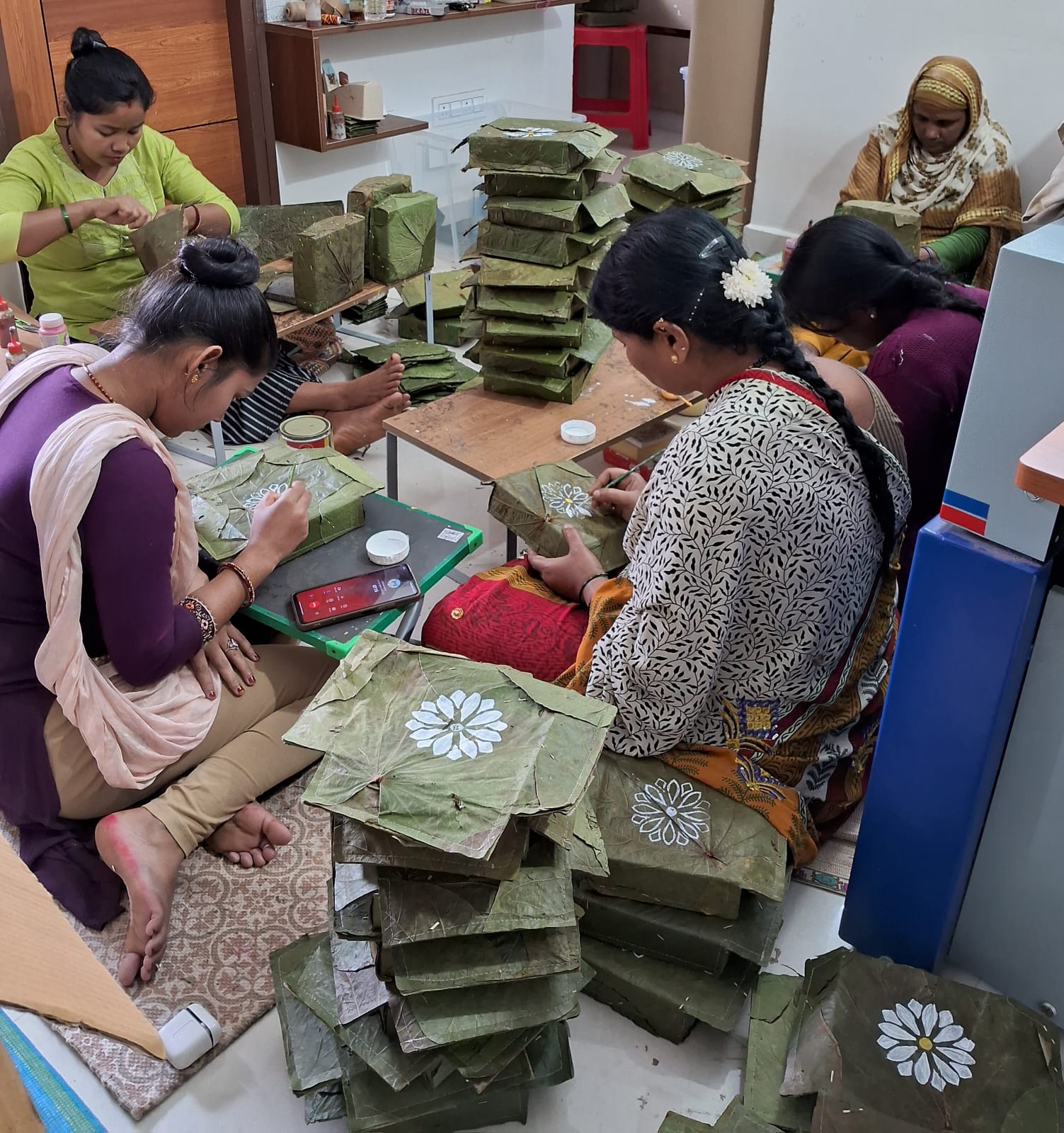
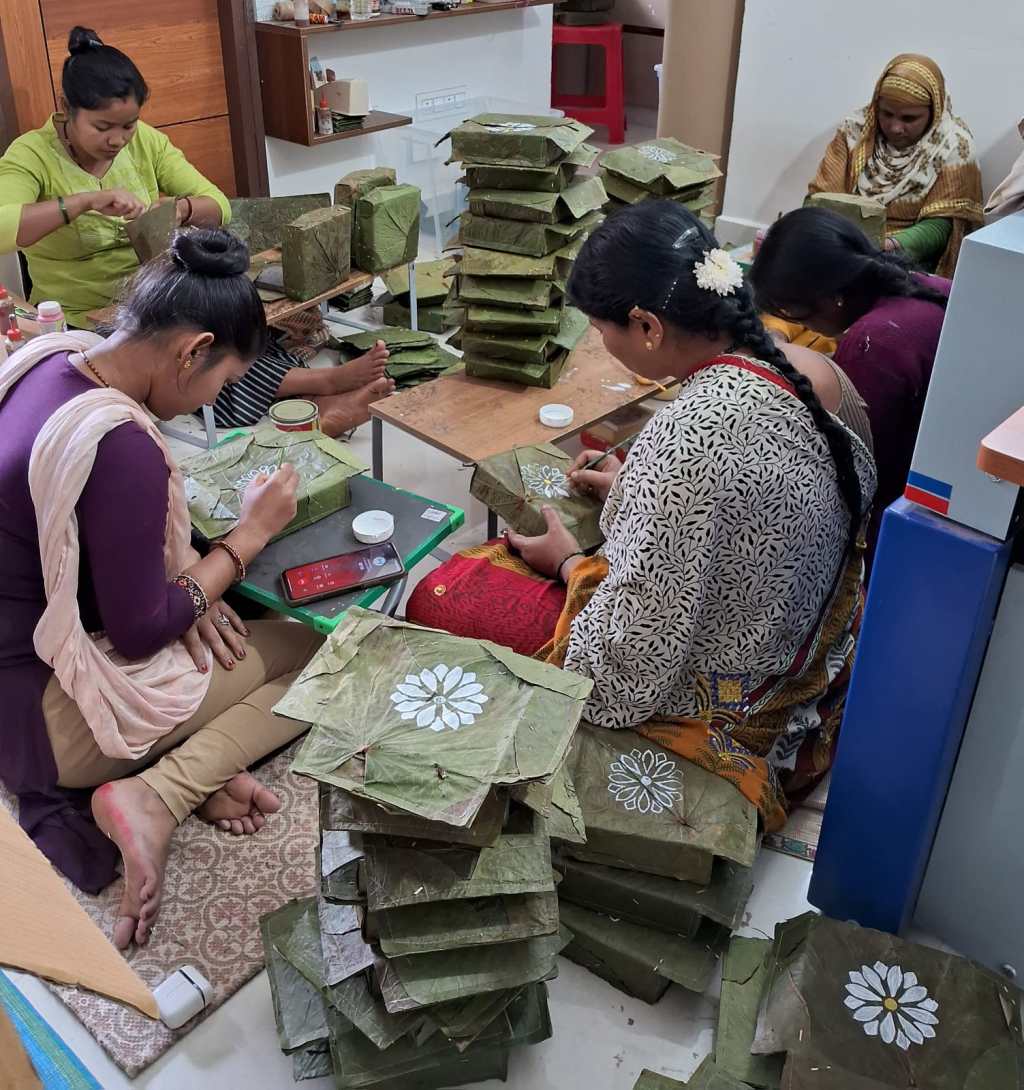
Chetna’s Bangalore team of around seven members works out of a space in Balagere near Whitefield – a location that also works for her personally because it is close to her home. She hires women from the community who can really use the supplemental income and trains them for a month in techniques to transform the round plates into packaging products. So far, Chetna and her sister – Klean-Green’s co-founder and also a NIFT graduate – have handled the design and marketing functions respectively. However, as their work expands, Chetna envisions having a larger design team to come up with new ideas for packaging solutions and functional home products.
There are two main barriers to scaling the business from where they are currently. Even with support from organizations like Startup Karnataka and Startup India, funding remains a challenge and keeps them from dreaming bigger. Naturally, fundraising is a big priority for the business at this point.
And though their small team is able to handle the current order volume, she knows there is room for streamlining the production process to boost their output. She is hoping to bring in automation experts who can guide the company in this area. At the same time, Chetna says, she wants to stay true to the Klean-Green commitment to social responsibility. As she puts it, “We are hiring women because we want to empower them as well”.
A special feature she’d like to add to the website is a tool that calculates the carbon offsets enabled by Klean-Green products. Chetna says they are actively reaching out to partners who can help them develop this tool and allow customers to gauge the positive impact of their purchases.
What’s Next for Klean-Green
This year, Klean-Green would like to make a bigger play in the corporate gifting space to leverage the interest and inquiries from companies seeking sustainable gift ideas. They also aim to collaborate with more NGOs working with tribal women across the country to expand their vendor base and secure their supply chain.
Although the leaf-based patal has been a great start for Klean-Green, Chetna is open to working with other biomaterials and alternatives. Down the road, she hopes to have more conversations with researchers and materials scientists who can point her to other promising inputs that they can explore for their products.
For now, Chetna says, she is encouraged to see a shift in both production and consumption behaviors. Many small, homegrown labels are seeking out her sustainable packaging for their products, and consumers are increasingly prioritizing sustainability when choosing items to gift or use in their own homes.
She says: “We owe it to future generations to rid the Earth of pollutants like microplastics —and it starts with eliminating disposable and single-use plastics from our daily lives.”
To explore Klean-Green products for your gifting needs or your business, check out their website or follow them @kleangreenbharat
Pic credit:
Women harvesting leaves – from photo essay by Abhijit Mohanty: https://www.villagesquare.in/sal-sufficient-leafy-tableware-of-odisha-santal-tribe/
 small & S..L..O..W
Leave a comment