

Most Gen X-ers like me, growing up in the India of the 80s, have probably seen the same kinds of heat busting hacks used during the summer months. I spent a good chunk of my childhood years in Nagpur in Central India where we poured water over the floor, covered windows with Khus screens (also called Vetiver, Khus is a native grass with cooling properties) and hauled a large water-based cooler into a bedroom to combat the searing hot climate of the region. During summer trips to Thanjavur in the south (where my grandparents lived), we also had to figure out how to handle the humidity in those parts. Fans usually ran at full tilt but, during frequent power cuts, we relied on handheld fans and guzzled cool well water stored in a large earthen pot throughout the day.
Achieving thermal comfort looks different these days with air conditioning becoming a fixture across middle and upper middle class homes, as well as in offices and commercial establishments.
But with temperatures soaring everywhere, there is a greater sense of urgency for adapting to this aspect of climate change. This past summer was particularly brutal – New Delhi, for example, hit a peak temperature of 52 degrees celsius in May. Since air conditioning creates about 4% of global greenhouse emissions, this is a prime area for directing climate mitigation efforts towards.
Ant Studio, an architectural firm started by Monish Siripurapu in 2014, wants us to reclaim a material that was commonly used in the past and that a rapidly developing India seems to have forgotten: terracotta. Through CoolAnt, a set of terracotta-based solutions that are designed to complement modern air conditioning systems, it is aiming to reduce the environmental impact of cooling. The name itself is a tribute to the work ethic of ants and their ability to fashion artistic and organic structures out of soil.
The CoolAnt set of designs uses terracotta modules of different shapes and sizes that are combined with water to enable evaporative cooling. This process, in turn, allows outside warm air to be cooled and pushed through to boost ventilation and lower temperatures within interior spaces. The current designs in the CoolAnt portfolio include Beehive, a set of stacked pots designed to let air circulate and cool through them; Binary, a combination of pots and tiles; and AeroleafTM, a design inspired by leaves and their transpiration mechanism. The team also leverages art installations that it calls CoolArt to spread the message on the need for climate responsive design and use of natural materials in construction.
Common CoolAnt applications include cooling envelopes and heat shielding screens for apartments and other buildings, as well as in common spaces. When used in conjunction with conventional air conditioning systems, the designs can result in significant energy savings (anywhere from 30-70%, the team believes) and associated cost benefits. CoolAnt was featured in Season 3 of Shark Tank India earlier this year when Monish presented it as a ‘natural and biomimetic (mimicking processes seen in Nature) cooling solution’.
I recently caught up with Pranjal Maheshwari, a researcher and architect at Ant Studio, to find out more about the inspiration behind CoolAnt, the kinds of projects they are handling, and what they hope to impact through their nature-inspired solutions.
The Origin Story & Thinking Behind CoolAnt
The CoolAnt system is actually the brainchild of the architectural practice called Ant Studio started by Monish Sirisarupu about a decade ago. The guiding philosophy behind the practice was to explore the convergence of art, nature and technology in architectural designs.
If you check out the studio’s portfolio, you will find there is extensive use of natural or regional materials and integrating them into contemporary forms and concepts. We use a great deal of terracotta in building facades and a lot of parametric forms as well. In today’s global world, where anything is available anywhere, there is a tendency to overuse materials like glass and concrete that are not ideal for our predominantly hot climate. They are designed for colder regions and in India, they contribute significantly to heat build-up in buildings.
As we advance as a society, we are seeing our lifestyles and choices evolve. But with CoolAnt, we wanted to see if it was still possible – through artistic expression or innovative technology exploration – to still use traditional techniques, materials and forms.

Optimizing for Water Use and Light Availability
Water use is quite integral to our systems because most of them are based on evaporative cooling. It is not the only thing that they do, however. We gain heat through a number of mediums – radiation, convection currents, and more – and our systems are also designed to address that through shading. If you shade a space, that helps to cut off the heat and then the evaporative cooling part helps in bringing the temperature down. The idea is to enable overall thermal comfort, and not just a drop in temperatures.
We are trying to optimize water usage as much as possible. Terracotta is a porous material that absorbs and retains water for a length of time. We don’t need to continuously run water through the systems as a result. It can also be collected and recirculated through them.

There is an impact on light coming into spaces with our installations but we do have solutions for that. The modules in our AeroleafTM design, for example, function like vertical louvers. It is possible to adjust the angles to maximize light, based on weather data at the site as well as by gauging client preferences. Ideally these calibrations have to be made in the beginning. Although it’s possible to engineer an automated kinetic system to control this aspect, it increases the cost significantly.

Examples of CoolAnt and Sustainability Aspects
We have done a wide range of installations through CoolAnt. The primary ones include building envelopes that provide direct space cooling. We also have installations in open spaces and landscaped areas such as the Cooling Cacti installation at Ahmedabad’s T1 airport.

Another simple but successful installation is the Twin Toilets project in Noida. The toilet walls here were set up as gabion walls with metal mesh covers and an infill of scrap terracotta pieces. This design can be used for boundary walls in apartment complexes and housing societies. There are also potential industrial applications as a pre-cooling mechanism. By integrating these walls with cooling towers in centralized air handling units, we can channel cooled air into the system, lower the load on compressors, and reduce energy consumption as a result.
Although terracotta is not easy to recycle, its manufacturing consumes considerably less energy compared to materials like concrete. We were looking for ways to reuse it and that’s how we zeroed in on the design in the Twin Toilets project where the infill was made of terracotta debris – consisting of broken bricks, tiles and single use household items such as pots and chai cups. All of this went into creating a wall that produced a cooling effect with the addition of running water and that was also biophilic, i.e. you can grow plants on it.

Challenges & Opportunities for Apartment Complexes
Most of the inquiries we get right now are for apartments and flats because that is where the majority of India lives. With old apartments, the space quality and volumetric ratio is not always optimal to ensure efficiency of the systems. Architecturally speaking, these spaces are not very well proportioned. They are either large rooms with small windows or very cramped spaces. Within housing societies, there are also various approvals and permits that are needed before an installation project can get off the ground. So, although our systems are designed to be retrofitted in older apartments, we do face numerous challenges with this route.
In the meantime, we are trying to help people understand their spaces and figure out if there is low hanging fruit they can address. There are some things they can tackle on their own – we discuss the possibilities with them and then let them decide what is feasible at their end. It doesn’t have to be a CoolAnt solution in all cases if the goal is to just make your environment more comfortable. For example, we can install a shading device, or an overhang across a window through which a lot of heat comes in. There are also many more possibilities with common spaces. A clubhouse, for example, would be an ideal location for a CoolAnt installation.
Protecting Their IP vs Propagating CoolAnt Solutions
We would like our designs to be widely available but we also have to be cognizant of the financial aspect of developing these systems. We have to be able to run this like a business while simultaneously maximizing social and environmental impact. On Shark Tank, Monish explained this dichotomy very well.
Beehive – which consists of handmade terracotta pots that are stacked together – was one of our first installations. The product itself is open source to the degree that the components are handmade by potters in different locations. It’s more sustainable and efficient to source these locally from close to the installation site rather than through a centralized facility that we run.

A customer may reach out to us to describe their space and cooling needs, and we can give them a plan that they are free to execute on their own. We feel there is value in making it open source and accessible to more people.
On the other hand, it does take extensive infrastructure to be able to get all the components in place. We use contract manufacturing and aim to meet rigorous quality standards for everything – from the tiles to the overall design.
Prominent Projects in the CoolAnt Portfolio
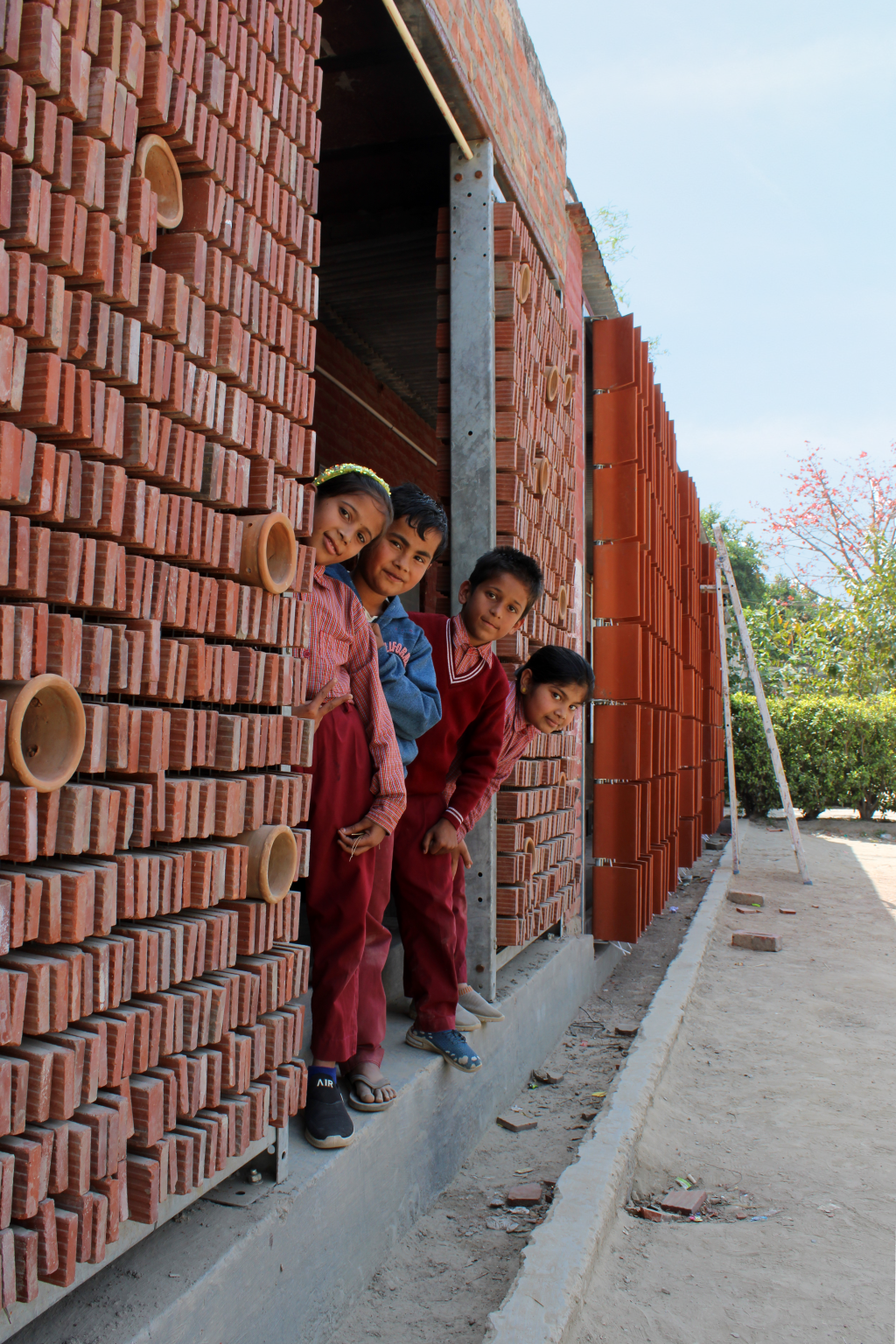
We got extensive coverage for our Beehive installation at Deki Electronics. The Twin Toilets project is a great example of how we can create something very functional from waste. We recently finished installing our systems at Vidya & Child NGO in Noida. The students there were studying in classrooms with concrete walls and asbestos and tin sheet roofing, which tended to heat up significantly. We installed the Binary and AeroleafTM systems along a west facing corridor running by the classrooms. These were also shaded and the cool air they generated could then enter the classrooms. That is a project we are very proud of. It not only made sure the children were more comfortable in the classrooms but also introduced them to nature-friendly design principles during their formative years.

We also carried out a successful installation for the Indian Army at their cantonment in Jaipur. The officers’ mess on the ground floor consisted of two large halls that were enveloped in glass. These spaces were initially cooled by several air conditioning units. On the first floor, we installed our Binary system with inlets into these spaces, and paired with exhaust fans on the opposite end. Jaipur is hot and dry and the system works really well for that climate. We actually won the National Energy Efficiency Innovation Award for this installation.

Goals for the Next Year & Beyond
Our primary goal is to reach more people with climate conscious building systems or architecture. Historically, these principles were part of Indian architecture but have gradually been overshadowed by ideas imported from other parts of the world.
In terms of affordability, we want to make sure our solutions are accessible to a wider demographic. Many people exposed to climate extremes may not have the financial means to afford traditional cooling systems. Something like CoolAnt may be within their reach.

To learn more about CoolAnt and to explore an all natural cooling system for your space, visit https://www.coolant.co/

 small & S..L..O..W
Leave a comment